If you’re shopping for a backyard pizza oven, you’ve probably landed on Ooni—the Scottish brand that more or less created the consumer high-heat pizza oven category. Their ovens do one thing that home ovens physically can’t: hit 950°F (500°C) at the cooking surface. That extreme heat is what turns a raw dough round into a blistered, leopard-spotted Neapolitan pizza in 60–90 seconds. The fuel source—wood, charcoal, propane, or all three depending on the model—determines how much control you get, how much setup you need, and how this oven fits into a permanent outdoor kitchen versus a camping kit. If you’ve already read the basics and you’re now comparing specific models with a purchase or build decision pending, this is the breakdown you need.
The three models most buyers are weighing right now are the Karu 12 (the entry multi-fuel, ~$399), the Karu 2 (the updated flagship multi-fuel, ~$599), and the Koda 16 (the gas-only large format, ~$599). Same brand, overlapping price, very different use cases. Here’s how to choose.
| EDITOR'S PICKOoni Karu 2 Pro Multi-Fuel Pizz… | Mid-tierOoni Koda 16 Propane Gas Pizza… | Budget pickOoni Karu 12 Multi-fuel Outdoor… | |
|---|---|---|---|
| Fuel Type | Multi-fuel | Propane only | Multi-fuel |
| Pizza Size | 16" | 16" | 12" |
| Max Temp | — | — | 950°F |
| Heat Time | — | — | 60 sec |
| Integrated Therm. | ✓ | — | — |
| Price | $849.00 | $498.00 | $248.95 |
| See on Amazon → | See on Amazon → | See on Amazon → |
By the Numbers
| Model | Cooking Surface | Max Temp | Fuel Options | Launch Price (2026) |
|---|---|---|---|---|
| Karu 12 | 13.2 in (33.5 cm) | 950°F / 500°C | Wood, charcoal, gas (addon) | ~$399 |
| Karu 2 | 13.2 in (33.5 cm) | 950°F / 500°C | Wood, charcoal, gas (addon) | ~$599 |
| Koda 16 | 16 in (40.6 cm) | 950°F / 500°C | Gas only | ~$599 |
Prices reflect Ooni MSRP as of May 2026 per Ooni official product specification pages for the Karu 12, Karu 2, and Koda 16. Gas burner adapter for Karu models sold separately (~$100).
Model-by-Model Breakdown
The Karu 12: Capable Entry Point, Real Constraints
The Karu 12 is the model that introduced most outdoor cooking enthusiasts to multi-fuel pizza ovens, and its durability as a product line reflects how well it was originally conceived. At roughly 26 pounds, it’s genuinely portable—light enough to travel to a friend’s property, appear at a pop-up dinner, or move off a cart and into storage when weather turns. The cooking surface fits up to a 12-inch pizza, which is enough for a personal pie but is a meaningful constraint if you’re feeding a table.
Across aggregated owner reviews and long-form roundups, a consistent pattern emerges: the Karu 12 heats fast—typically 15 minutes to target temp on gas, longer on wood—is forgiving to learn on, and performs well for two-to-three-person households. Serious Eats, in their 2025 update to “The Best Pizza Ovens for Your Backyard,” noted that the Karu 12 remains a legitimate recommendation for buyers new to high-heat pizza who want a lower-stakes entry point. The complaint that surfaces repeatedly is that feeding a larger group requires a production-line rhythm—cook, plate, repeat—that removes the cook from the social experience entirely. If that’s your scenario, the Karu 12 will frustrate you within your first dinner party.
The gas burner adapter is a $100 add-on, not included in the base kit. Budget for it upfront if gas convenience is part of your plan. On wood and charcoal, the Karu 12 delivers genuine wood-fired flavor and the ritual that many buyers are after—but the small firebox means you’ll tend the fire more frequently than you might expect.
Best fit: Solo or couples cooks, glamping setups, portable builds, buyers who are genuinely new to high-heat pizza and want a lower-stakes entry point before committing to a permanent installation.
Skip it if: You’re regularly cooking for four or more, or you’re spec’ing a fixed outdoor kitchen where you want the oven to be the centerpiece rather than a component you outgrow.
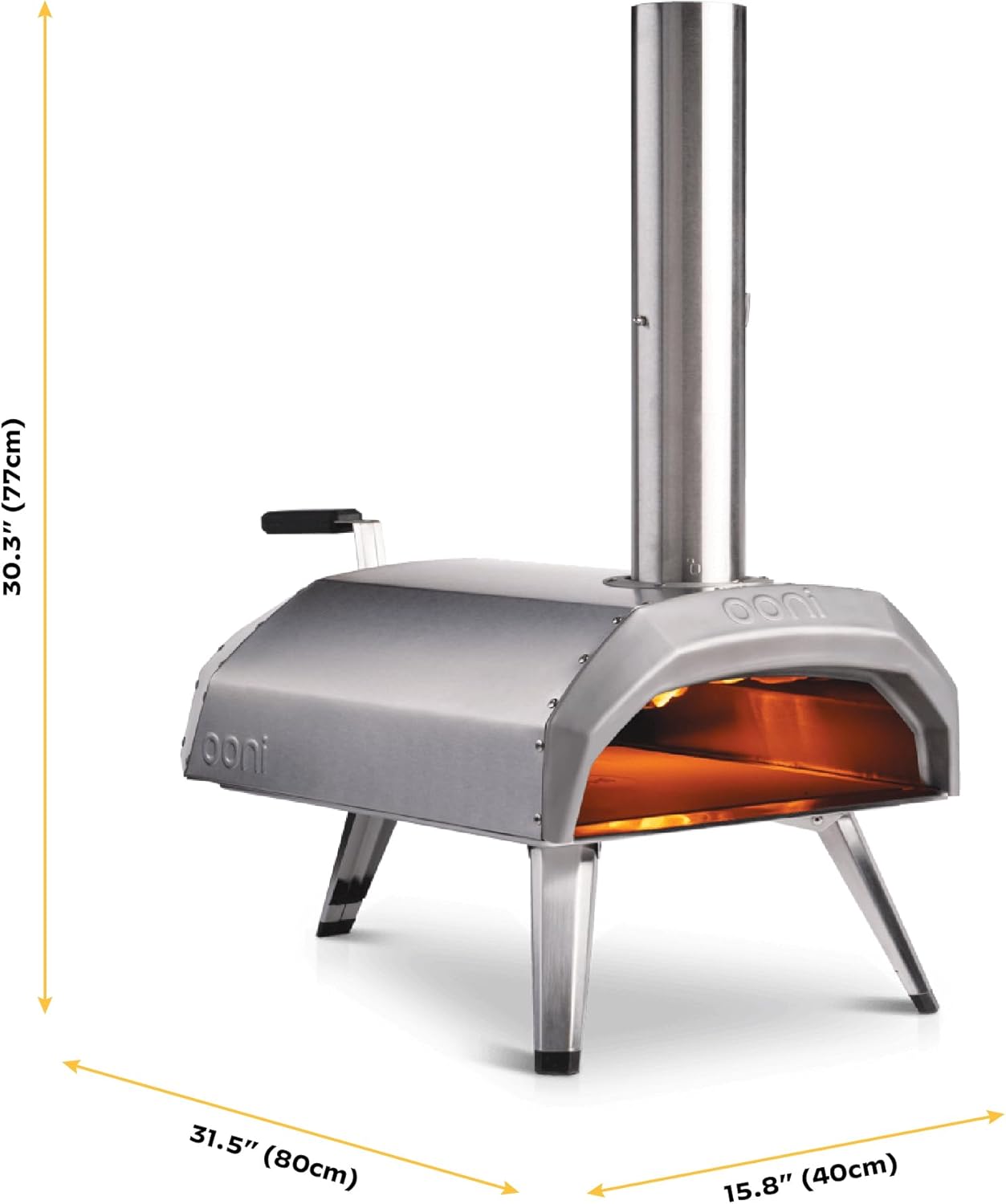
Ooni
$248.95
In stock on Amazon
Check price on AmazonThe Karu 2: What You’re Actually Paying for at $599
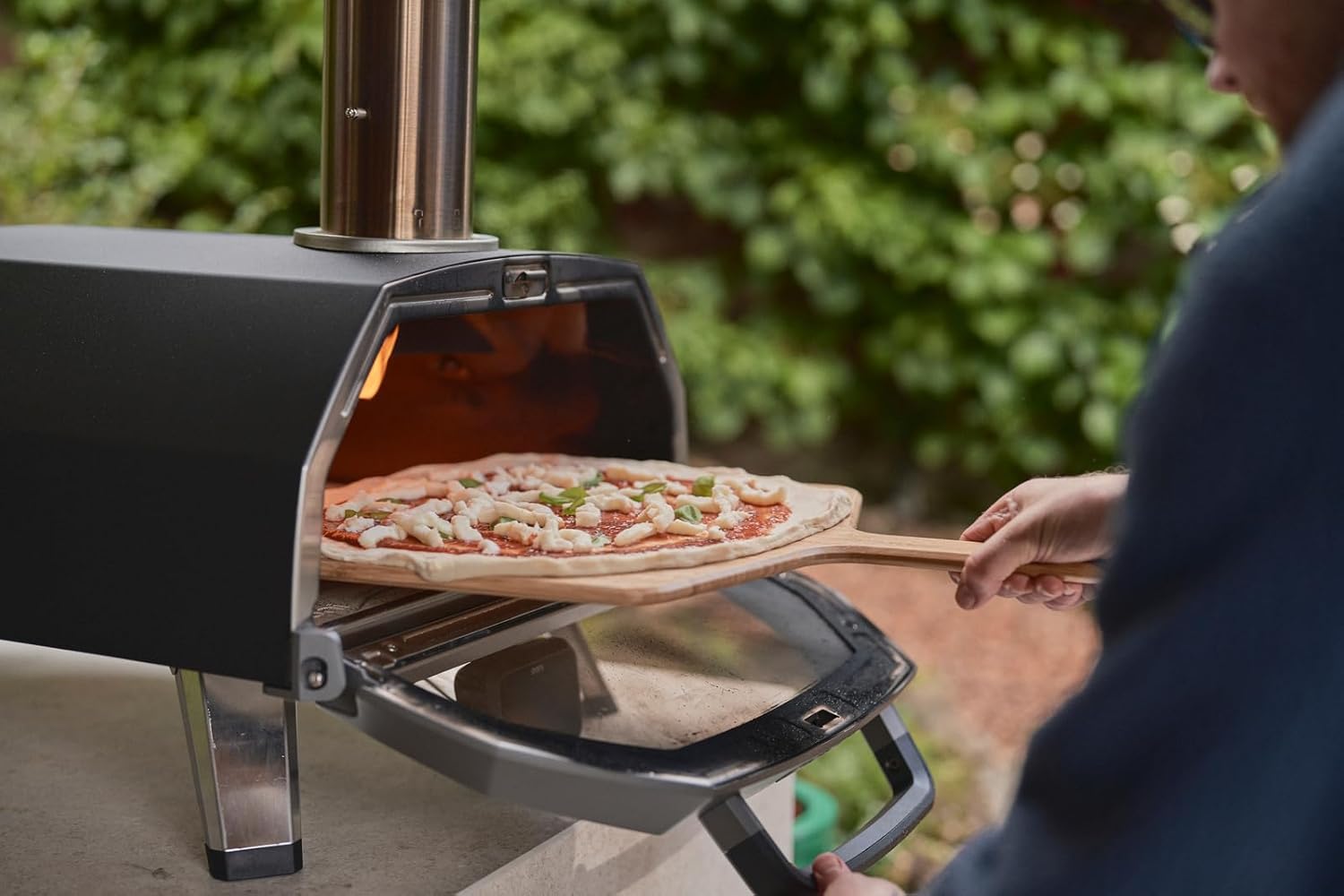
The Karu 2 arrived as Ooni’s most complete multi-fuel statement, and the price bump over the Karu 12 is real—so it’s worth being specific about what you get. The headline improvement is the integrated ViewFlame door, a glass-front design that lets you watch the fire and monitor the cook without opening the oven and losing heat. That sounds cosmetic until you’re 90 seconds into a cook and trying to decide whether to turn the pie. Owners report it materially reduces the heat-loss problem that affects the Karu 12 when checking on a cook.
The Karu 2 also ships with a built-in thermometer mounted for easy reading, improved airflow controls that give you more granular command over combustion when running wood or charcoal, and a redesigned fuel door that operators in long-run reviews describe as significantly less cumbersome than the original Karu’s hinge system. Per Ooni’s official product specification pages, the cooking surface dimension is identical to the Karu 12 at 13.2 inches—that’s a meaningful fact to internalize. You are not getting more pizza real estate at the higher price point.
What you are getting is a more refined firing experience, a product that’s more intuitive to run for guests or less experienced cooks sharing your kitchen, and a design language that reads as intentional rather than utilitarian. Bon Appétit, in their 2024 piece “We Ranked Every Ooni Pizza Oven,” specifically called the Karu 2 the model they’d recommend if you plan to use wood more than occasionally—the better airflow system makes a practical difference during multi-hour cooking sessions.
The gas adapter situation is the same as the Karu 12: sold separately, ~$100. If you’re going gas-primary, factor that into the all-in cost comparison. At $599 plus a $100 gas adapter, you’re spending $700 on a 13.2-inch cooking surface—a number that deserves honest scrutiny when you’re weighing it against the Koda 16.
Best fit: Buyers who want multi-fuel flexibility as a genuine feature (not a fallback), are committed to wood-fired flavor, and are building a mid-tier permanent or semi-permanent outdoor kitchen where the oven’s aesthetics matter as much as its output.
Skip it if: You’re gas-only and have no interest in tending a fire. At $599 plus the gas adapter, you’re spending $700 on a 13.2-inch cooking surface when the Koda 16 delivers a larger footprint for $599 with gas already built in.
Ooni
$498.00
In stock on Amazon
Check price on AmazonThe Koda 16: The Right Answer for More Builds Than You’d Think
The Koda 16 is the outlier in this comparison because it makes a clean trade: give up fuel flexibility entirely, gain meaningful cooking surface. At 16 inches of usable stone, you can cook a proper New York–style large pie, you can cook two smaller pizzas simultaneously in a pinch, and you can step back from the oven between launches without the fire dying on you. Serious Eats, in “The Best Pizza Ovens for Your Backyard” (2025 update), consistently cited the Koda 16 as the pick for buyers who prioritize throughput and ease of operation over the ritual of live fire.
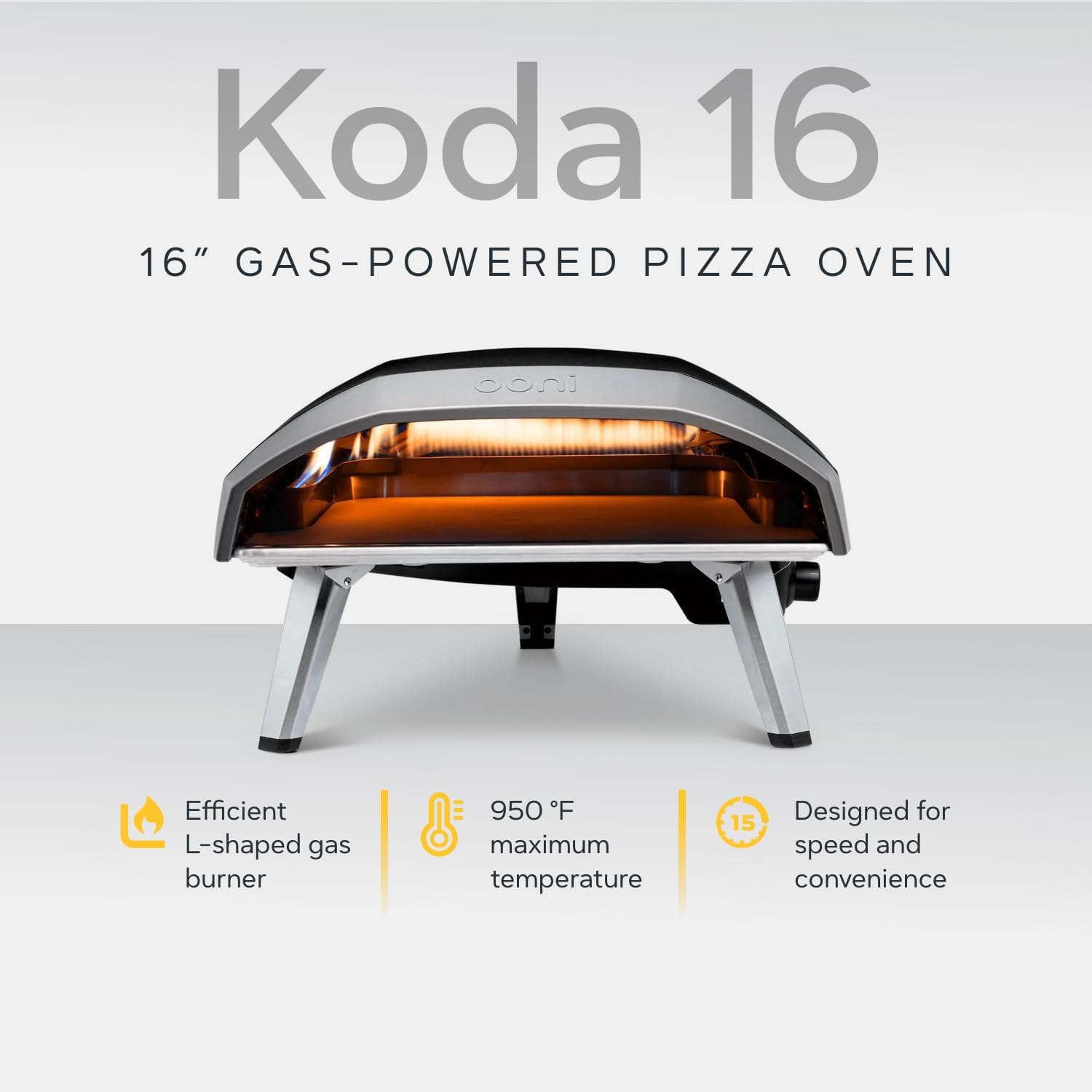
Gas-only is not a limitation for most outdoor kitchen builds—it’s a feature. A permanently plumbed propane or natural gas line eliminates the fuel logistics entirely. You turn a knob, wait 15–20 minutes, and cook. For glamping operators, event caterers, or anyone running a high-volume outdoor kitchen where consistency matters more than romance, this matters enormously. Per Ooni’s official Koda 16 product specification pages, the oven’s L-shaped burner is engineered to create even heat distribution across the larger stone surface—a non-trivial challenge at that footprint.
Dwell, in their 2025 feature “How to Build an Outdoor Kitchen That Actually Gets Used,” noted that gas-integrated pizza ovens have become a common spec in designed outdoor kitchens precisely because they integrate cleanly with gas infrastructure that’s already being run for grills and side burners. The Koda 16 fits that pattern directly. That’s a legitimate use case, not a consolation prize.
The honest trade-off: you will never get Neapolitan wood-smoke character from the Koda 16. If that flavor profile is important to you—and for many pizza obsessives, it is the whole point—the Koda 16 is the wrong oven no matter how convenient it is.
Best fit: Fixed outdoor kitchen builds with gas infrastructure, operators cooking for larger groups (4–8 people) regularly, buyers who want high performance without fuel management, and anyone who values consistency over character.
Skip it if: Wood-fired flavor is non-negotiable, or you need portability. The Koda 16 weighs 40.5 pounds per Ooni’s published specifications and is not a travel oven.
Ooni
$849.00
In stock on Amazon
Check price on AmazonThe Decision Frame: If X, Then Y
If you’re stalling on this decision, here’s the honest filter:
If you cook primarily with gas and host groups of four or more: Buy the Koda 16. It’s the right oven. You are not compromising—you’re making a smart spec decision. The extra cooking surface pays off on every single cook.
If wood-fired flavor matters to you and you’re building a permanent or semi-permanent kitchen: Buy the Karu 2. The $200 premium over the Karu 12 is justified by the operational improvements, and you’ll appreciate them the hundredth time you use it, not just the fifth. Add the gas burner adapter for weeknights when you want speed without setup.
If you’re not sure yet, budget is a real constraint, or you’re buying your first high-heat oven: Start with the Karu 12. It’s a genuine performer, not a consolation model. If you find yourself cooking more than you expected and wishing for more surface area or smoother multi-fuel operation, you’ll have a clear upgrade path and a solid resale case on the 12.
If you’re spec’ing for a glamping operation or small-scale catering context: The Koda 16 wins on throughput and reliability; the Karu 2 wins on experience and story. Some operators run the Koda 16 for production volume and keep a Karu 2 visible for guest experience—the best of both approaches at a combined investment of roughly $1,200 before accessories.
What to Budget Beyond the Oven
Wirecutter, in “The Best Outdoor Pizza Oven” (New York Times, 2025), notes that the oven purchase is typically 60–70% of the total first-year spend for new high-heat pizza setups. The remaining costs add up fast:
- Ooni pizza stone or baking steel (if not included): $50–$80
- Infrared thermometer (essential for knowing actual stone temp): $30–$50
- Pizza peel set (launch peel + turning peel): $60–$120 depending on material
- Gas burner adapter (Karu models, if desired): ~$100
- Carry cover or storage bag: $50–$80
- Wood pellets or hardwood chunks (Karu users): $20–$40 per supply run
For a fixed outdoor kitchen build, add the counter or cart integration cost. Ooni’s own modular table system runs $250–$400, and custom stone or tile surrounds from a masonry contractor will scale from there depending on your market. Dwell’s 2025 outdoor kitchen feature also flags permitting costs and utility hookup fees as frequent budget surprises in permanent installations—worth a conversation with your contractor before finalizing your oven spec.
The oven is the decision. The accessories are a known quantity. Get the model right first, and the rest follows.